
Best 3D printers for cosplay and props
Updated 18 September 2026 · Live prices on every page load from United Kingdom marketplaces
Big build volumes for one-piece helmets, large shields and full-armour pieces. Tuned for PLA and PETG reliability, not engineering materials.
- #1
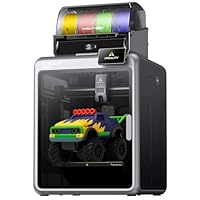 CrealityK2 Pro£692 CoreXY · 270.0 L · 300°C · Smart Auto Leveling
 - #2
 Sanpyl£116 · 100.0 L
 - #3
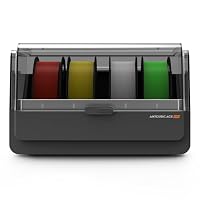 ANYCUBICColor Engine Pro£230 Bedslinger · 88.2 L · 300°C · LeviQ 3.0
 - #4
 XYZprintingXYZ Printing da Vinci Jr. 1.0£184 · 64.9 L
 - #5
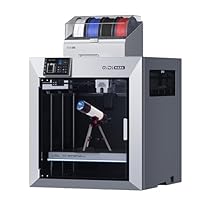 QIDI TECHQIDI MAX4£1029 CoreXY · heated chamber · 51.7 L · 370°C · Loadcell Sensor Integrated int
 - #6
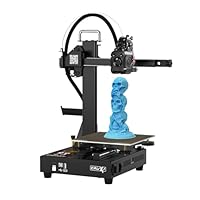 TRONXY£181 · 58.3 L · 275°C
 - #7
 QIDI TECHQIDI MAX4£959 CoreXY · 51.7 L · 370°C · Loadcell Sensor
 - #8
 CrealityK2 Plus Multi 16 Colors Printing£700 CoreXY · 42.9 L · 350°C · Strain gauge
 - #9
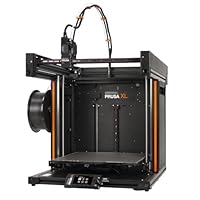 ORIGINAL PRUSAXL Single Tool - Large Professional SEMIAS£1499 CoreXY · 46.7 L · 290°C · Loadcell
 - #10
 CrealityCFS - Filament System£289 Cartesian · 42.9 L · 350°C · Automatic leveling
No listings match your current marketplace selection - tick more sources above.
Matt's take
Cosplay printers have a different priority stack from engineering printers. You want build volume (so helmets fit in one piece), PLA and PETG reliability (because those are what painters like), and a stable frame (because a 15-hour helmet print does not forgive a skipped step). What you don't need: a £200 heated chamber upgrade, a 300 °C hot end for nylon, or toolchanging. Save that money and put it into filament - a full helmet in PLA+ is 400-600 g and you'll print three before you're happy.
Frequently asked
What size printer do I need for cosplay? +
250x250x250 mm covers most full-face helmets in one piece. For full-size Iron Man or larger gauntlets, step up to 300+ mm in at least one axis. The Creality K2 Plus, Bambu P1S with AMS and Qidi Plus4 all land here.
Do I need a big bed or can I just glue parts together? +
You can glue, and many cosplayers do. But every seam is an extra round of filler, sand, primer - maybe two hours per seam. A big printer saves you that work over the course of one armour set.
Is PLA good enough for cosplay or should I use PETG? +
PLA+ (the stronger blends) is the cosplay default - easy to print, easy to paint, takes a sand well. PETG is tougher but harder to finish smooth. Save PETG for pieces that will see impact or heat.
Related reading
Ranking is spec-driven. It favours printers that objectively have the capabilities this shortlist targets. Firmware, support quality and long-term reliability aren't on the spec sheet - read the full printer page and owner reports before committing.
